How Virtual Assistants Enhance Work-Life Balance
Introduction
In today’s fast-paced world, the concept of work-life balance has become a central theme in discussions about well-being, productivity, and the overall quality of life. Balancing work responsibilities with personal life can be an intricate dance, where one misstep can lead to increased stress, burnout, and dissatisfaction. The rise of technology has introduced a variety of solutions to aid individuals in achieving and maintaining this balance. Among these solutions, the use of virtual assistants (VAs) has emerged as an effective strategy for many professionals.
Virtual assistants are professionals who provide administrative, technical, or creative services remotely. They can be employed part-time or full-time and can handle varied responsibilities, helping to streamline operations and free up time for their employers. This essay explores how virtual assistants can improve work-life balance through the reduction of workloads, enhancement of productivity, and facilitation of a more organized lifestyle. The discussion will delve into the benefits of delegating tasks, overcoming common challenges, and embracing a supportive work infrastructure that VAs foster.
The Need for Work-Life Balance
Understanding Work-Life Balance
Work-life balance is defined as the equilibrium between personal life and work commitments. Achieving this balance is crucial for mental health, social relationships, and overall satisfaction with life. A survey conducted by the American Psychological Association revealed that employees who had a satisfactory balance reported higher levels of happiness and lower levels of stress.
The modern work environment often blurs the lines between professional obligations and personal life. With the advent of remote work and technological advancements, such as smartphones and cloud-based applications, staying connected to work has become easier but has also intensified the challenge of disconnecting. This has resulted in an increase in employee burnout, anxiety, and even physical health issues.
Common Challenges Faced in Work-Life Balance
Most professionals experience challenges in maintaining work-life balance due to:
– Overstretched Schedules: Work demands frequently extend beyond traditional hours. Emails and messages are expected to be answered promptly, even during personal time.
– Multitasking: Juggling multiple responsibilities at home and work can lead to increased pressure and decreased efficiency.
– Lack of Personal Time: Personal interests and self-care are often relegated to the back burner, leading to burnout and decreased quality of life.
– Expectations from Others: Colleagues and supervisors can inadvertently add to the burden by placing unrealistic expectations on workers, leading to additional stressors.
To combat these challenges, individuals are increasingly turning to virtual assistants as a resource for better managing their workload and reclaiming their time.
How Virtual Assistants Enhance Work-Life Balance
Reducing Workload
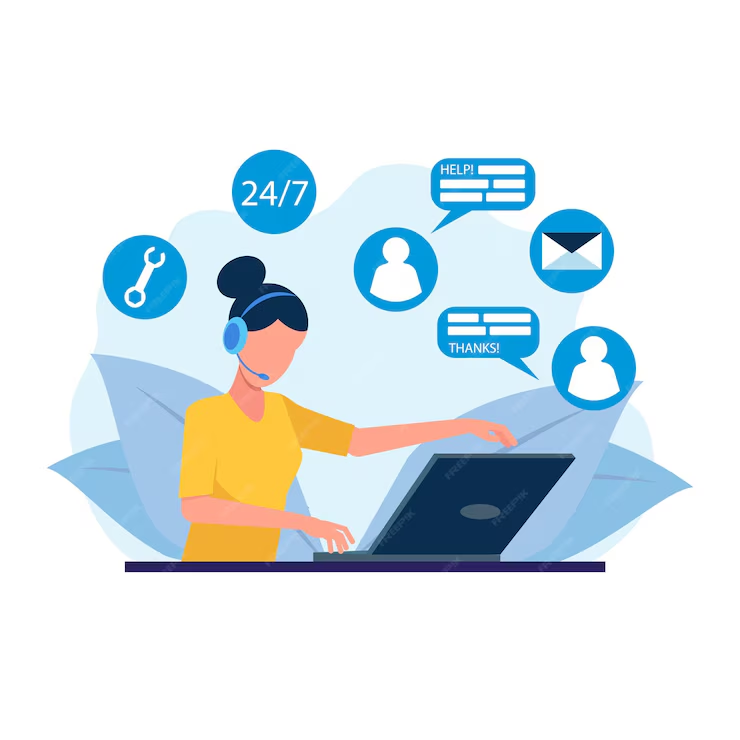
One of the primary benefits of engaging a virtual assistant is the reduction of workload. By outsourcing tasks that can be handled by a VA, individuals can allocate more time to personal pursuits and family obligations. Tasks that virtual assistants commonly take on include:
– Administrative Support: Scheduling meetings, managing calendars, and organizing emails can consume a significant portion of one’s workday. VAs can manage these tasks efficiently, allowing individuals to focus on core responsibilities.
– Customer Service: Handling customer inquiries and support can be time-consuming. A VA can be trained to respond to emails, engage with social media, or even handle live chat functions, ensuring customers receive timely responses while freeing the employer to focus on critical areas.
– Social Media Management: For those with businesses or professional brands, managing social media can be a full-time job. Virtual assistants can create content, schedule posts, and engage with followers, enhancing online presence without burdening the employer.
By distributing responsibilities in this manner, a sense of relief can replace overwhelm, significantly improving an individual’s ability to pursue personal interests.
Enhancing Productivity
With a virtual assistant handling time-consuming tasks, individuals can see a marked improvement in productivity. Research by the University of California found that every time a person is interrupted, it can take up to 23 minutes to regain focus on the task at hand.
A VA helps mitigate interruptions and distractions by:
– Prioritizing Tasks: Virtual assistants can help determine which tasks are most important and should be addressed first. They can develop to-do lists and project timelines that align with personal and organizational goals.
– Setting Boundaries: A dedicated VA can help establish better boundaries by managing emails and phone calls. By filtering out unnecessary communications, employees can concentrate on their work and minimize distractions.
– Improving Time Management: VAs are skilled in managing time efficiently. They can assist in scheduling appointments, thus freeing up chunks of time to focus on more important or productive activities.
Assuring enhanced productivity not only contributes to career advancement but can also ease the guilt that comes with taking time away from work for personal self-care.
Fostering a More Organized Lifestyle
A virtual assistant contributes significantly to an organized lifestyle, providing structure that can lead to reduced stress. An organized workspace promotes clarity of thought and efficiency, resulting in:
– Effective Workspace Management: A VA can help organize digital files, maintain shared documents, and ensure that essential resources are easily accessible. A clutter-free digital world can lead to a clearer mind.
– Creating Routines: Having a virtual assistant can assist in establishing daily and weekly routines. A VA can remind individuals of priorities, commitments, and deadlines, fostering organization in both work and personal life.
– Facilitating Communication: VAs can also help streamline communication with family members, helping to keep personal commitments and social responsibilities aligned with professional duties.
With an organized lifestyle, individuals can reduce decision fatigue, allowing for more mental energy to invest in personal pursuits and relationships in their lives.
Overcoming Common Challenges in Utilizing Virtual Assistants
While engaging a virtual assistant can be a game-changer, it is essential to recognize and address common challenges associated with this transition.
Finding the Right Fit
The effectiveness of a VA hinges on finding the right individual or team to align with personal and organizational values and objectives. Tips for finding the right fit include:
– Define Requirements: Clarifying the specific tasks and responsibilities can help to ensure that the candidate possesses the necessary skills.
– Assess Experience: Reviewing previous experience and client testimonials can aid in the selection process.
– Conduct Thorough Interviews: Engaging in a direct conversation with potential VAs can provide insights into their problem-solving approach and compatibility with your work style.
Communication Challenges
Remote work environments can lead to potential communication issues. To foster effective communication:
– Set Clear Expectations: Establish detailed guidelines about workload, deadlines, and communication methods to avoid misunderstandings.
– Utilize Technology: Tools such as Slack, Zoom, or project management software like Asana or Trello can facilitate effective collaboration and communication.
– Regular Check-ins: Scheduling routine touchpoints enables ongoing dialogue, feedback, and adjustments to processes.
Effective communication sets the stage for a productive and positive working relationship.
Budgetary Concerns
Worries about cost can deter individuals from hiring a VA. However, when weighed against the potential benefits, the investment may become justified.
– Consider the Return on Investment: Assess how the time saved can be reallocated toward activities that yield more income or provide personal fulfillment.
– Start Small and Scale Up: Begin with smaller, less complex tasks before delegating more critical responsibilities. This allows for an initial assessment of value and performance.
Conclusion
In a world where achieving work-life balance is increasingly challenging, virtual assistants offer a lifeline for many professionals. By reducing workload, enhancing productivity, and fostering organizational skills, VAs empower individuals to reclaim their time, prioritize personal well-being, and improve their overall quality of life.
While challenges in finding the right fit and ensuring effective communication exist, the potential benefits afforded by engaging a virtual assistant can surpass concerns, contributing to a more fulfilling and balanced life. Ultimately, leveraging the skills of a virtual assistant can pave the way for improved work-life harmony, bolstering both personal and professional satisfaction. As technology continues to evolve and reshape the workplace, virtual assistants will undoubtedly become even more integral to maintaining that delicate balance between work and life.